What makes a humanoid robot useful is not the hardware alone — it is the motion. Ludu Robotics runs a complete reinforcement-learning motion pipeline that turns movement ideas into robust real-world skills on Ludu 3.
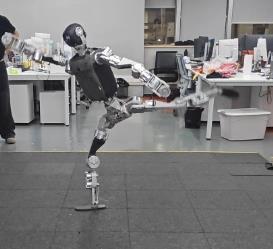
The five-stage pipeline
- 1. Motion data capture — collect reference motions of walking, stepping, jumping or task movements
- 2. Retargeting — map the reference onto Ludu 3's 31-DoF body
- 3. RL training — train robust policies in simulation with domain randomization
- 4. Sim2Sim validation — verify the policy across physics simulators before touching hardware
- 5. Sim2Real deployment — deploy on the robot via the 1 kHz real-time control unit
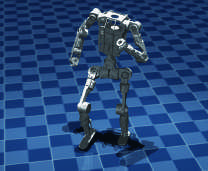
The pipeline is how Ludu 3 learned to walk at up to 5 m/s, jump, kick and recover from pushes — and it is the same pipeline your project can use for scenario-specific motions: a new gait for a factory floor, a bowing gesture for reception duty, or a novel manipulation strategy. New motion strategies typically take 2–4 weeks.
An open stack you can build on
ODM customers receive the whole toolchain: CAN FD MIT protocol, ROS 2, the RL training framework and URDF models on Ubuntu 22.04. Your team can retrain policies, tune gaits or develop entirely new skills — with our engineers on call.
Ready to build a humanoid robot under your own brand?
Get a Quote